
Agentic Payments in the UAE: What Is Live and What Needs a Pilot?
Review dated Mastercard and Visa examples in the UAE. Separate pilots, live implementations and readiness programs from support for your merchant account.

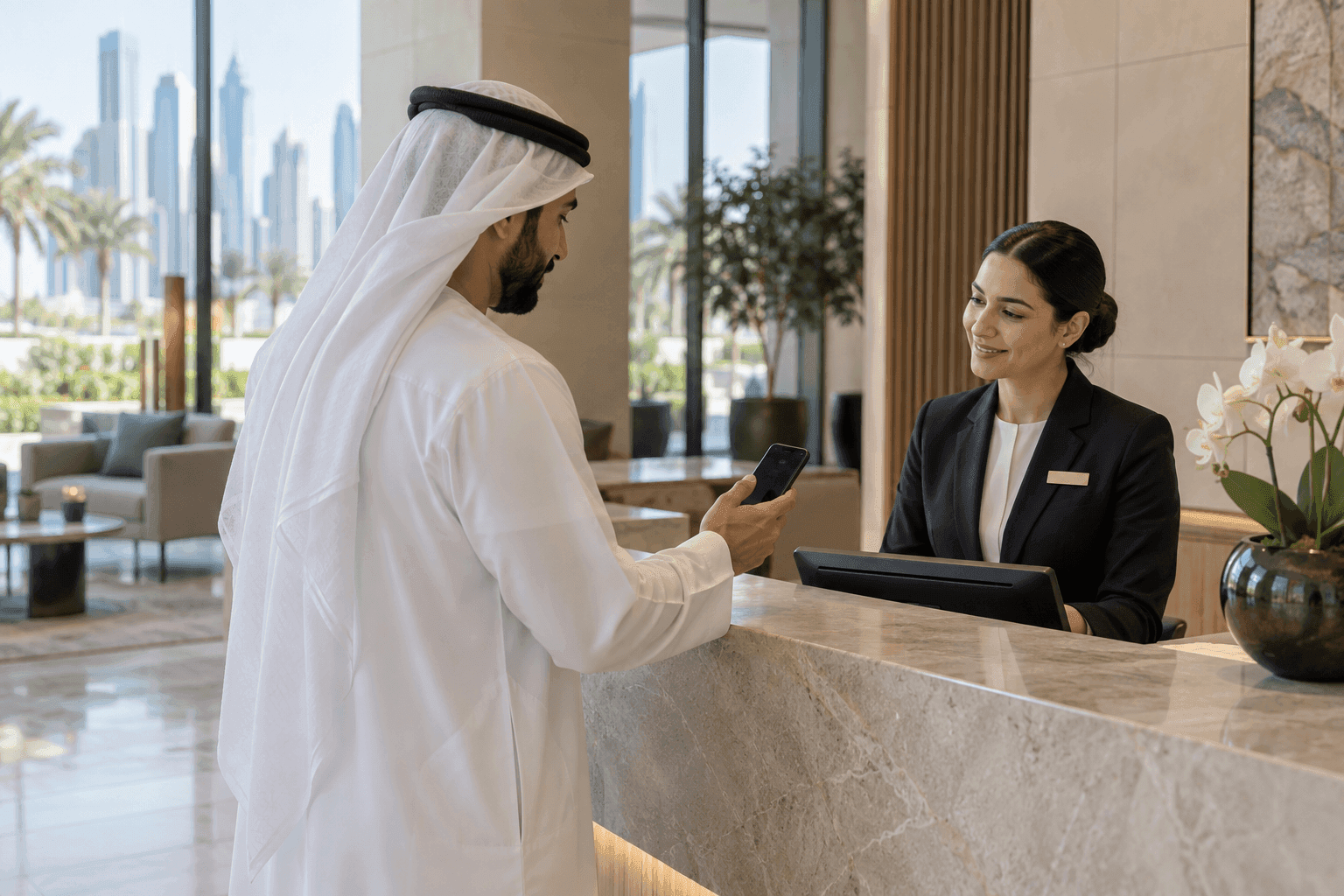
AI-generated editorial illustration
Article contents
Agentic payments have documented UAE implementations, but a successful announced transaction does not mean every merchant can activate the same service. Separate evidence that a particular journey worked from confirmation that your account, channel, customer and payment partners support it today.
For a UAE commerce leader, the useful next decision is a bounded pilot with written partner support and an explainable transaction path. PRO71 scopes payment and checkout integration around the actual merchant environment, including consent, order state and recovery. Start with a repeatable use case rather than assuming broad unattended purchasing is ready.
What has been documented in the UAE?
On 19 November 2025, Mastercard announced Agent Pay's UAE introduction and a first transaction outside the US, describing a pilot with Majid Al Futtaim and Dataiera. Its release referred to future cardholder experiences including VOX Cinemas ticket booking. That is evidence of a pilot milestone, not universal merchant activation. Mastercard announcement.
On 18 December 2025, Visa and Aldar described a first live regional implementation of Visa Intelligent Commerce. The reported transaction paid real estate service charges through an AI agent in Live Aldar with a consent-led flow. The scope supports a concrete local example; it should not be generalized to every retail checkout. Visa and Aldar announcement.
On 20 May 2026, Visa announced its Agentic Ready program in the UAE. The initial phase enables issuer testing and validation in a controlled, production-grade environment. A readiness program is evidence of ecosystem preparation, while individual merchant support still needs confirmation. Visa Agentic Ready.
How should a buyer interpret “live,” “pilot” and “ready”?
Read those terms against the named participants and transaction. “Live” can describe a real implementation with a narrow use case. “Pilot” can include a real transaction while access remains limited. “Ready” may describe a participant's testing program rather than a generally available merchant product.
Scroll horizontally to view the full table
| Evidence | What it supports | What to verify for your project |
|---|---|---|
| Named pilot transaction | A defined flow was demonstrated | Eligibility and continued access |
| Live implementation | A specific use case operated | Your account, instruments and channel support |
| Issuer readiness program | Partners can test and validate | Merchant onboarding and end-to-end responsibilities |
| Written project support | A route is available within stated limits | Acceptance tests, exceptions and support ownership |
Ask for the current merchant-facing documentation and account-level confirmation. Record the answer's date, conditions and owner. Avoid basing a procurement commitment on a future-tense press release or another organization's configuration.

Which first use case is suitable?
Choose a predictable transaction with clear identity, amount determination and customer confirmation. An illustrative repeat-payment journey might retrieve an eligible customer's current charge, present the final amount and execute through a supported consent-led flow.
This is a scoping pattern, not a claim that the Aldar implementation is available as a plug-in for other businesses. Your partners must support the equivalent journey. A limited product purchase can also be suitable when variants, stock and fulfilment are well controlled.
Exclude complex substitutions, mixed payment methods and open-ended spending at first. Those cases add commercial and authorization uncertainty. The pilot should answer whether one supported transaction can be completed and recovered reliably, before attempting a larger shopping assistant.
What must the payment and commerce partners confirm?
Confirm supported customer instruments, merchant account eligibility, integration interfaces, authentication or confirmation steps and the route for uncertain responses. Establish who owns the token or credential flow and which parties may access it.
Then connect payment to the merchant record. A payment result should bind to a valid checkout or charge reference and an accepted order where relevant. Do not treat processor acceptance as proof that stock, fulfilment or customer service has received a complete transaction.
Agree the refund, cancellation and dispute evidence paths with the responsible partners. The project should not invent those rules. Payment security language, including tokenization, does not independently prove that the customer authorized the specific purchase.
How do you test a pilot before expanding?
Test changed amounts, expired permission, declined authorization, duplicate submission and loss of response after execution. Include a failure between payment and order creation. For each test, show the final provider and merchant states and the customer's message.
Require a human support route and stop conditions. If the system cannot validate authority or determine whether a payment occurred, it should not keep initiating transactions. Finance and customer service must know how to investigate the pending record.
Measure valid completion, exceptions, duplicate attempts, unmatched transactions and time to resolution. A high completion rate on a few handpicked examples is insufficient; include the supported boundary and negative tests in the results.
What scope should an integration proposal include?
Separate partner enablement, checkout changes, authority checks, merchant system integration and operational support. Estimate effort from the existing payment stack, transaction complexity, state visibility and exception handling. A public announcement cannot resolve those dependencies for your store.
Ask the supplier to name assumptions and exclusions, and to provide a dated support confirmation before promising launch. If availability is uncertain, commission a short eligibility and architecture review with a clear go-or-defer decision.
PRO71 can help align commerce, finance and technology owners around that review and a controlled first release. The readiness conversation should produce evidence and ownership, without inventing a certified offer, network endorsement or guaranteed access.

Buyer FAQs
Can any UAE store enable agentic payments now?
Do not assume so. Verify the supported product, account, instruments, channel and partner onboarding for the intended journey.
Does a production-grade test program mean general availability?
No. It describes the environment and program scope. Merchant access and supported use cases require their own evidence.
Should we begin with unattended purchases?
Only if the authority and payment flow are explicitly supported and tested. A customer-confirmed transaction is often a clearer first boundary.
Is an existing tokenized checkout sufficient?
It can be a useful dependency, but it does not establish agent authority, channel compatibility or recovery across merchant systems.
What is the next step?
Use payment and checkout integration to assess one use case against dated partner evidence. Bring the current payment flow and account constraints so the review can identify a supported pilot or a concrete dependency to resolve.
Continue the series
Definition: Agentic AI.
About the author
PRO71 Team
Turn the reading into a decision
We can review the context and define the next move clearly.